Education System
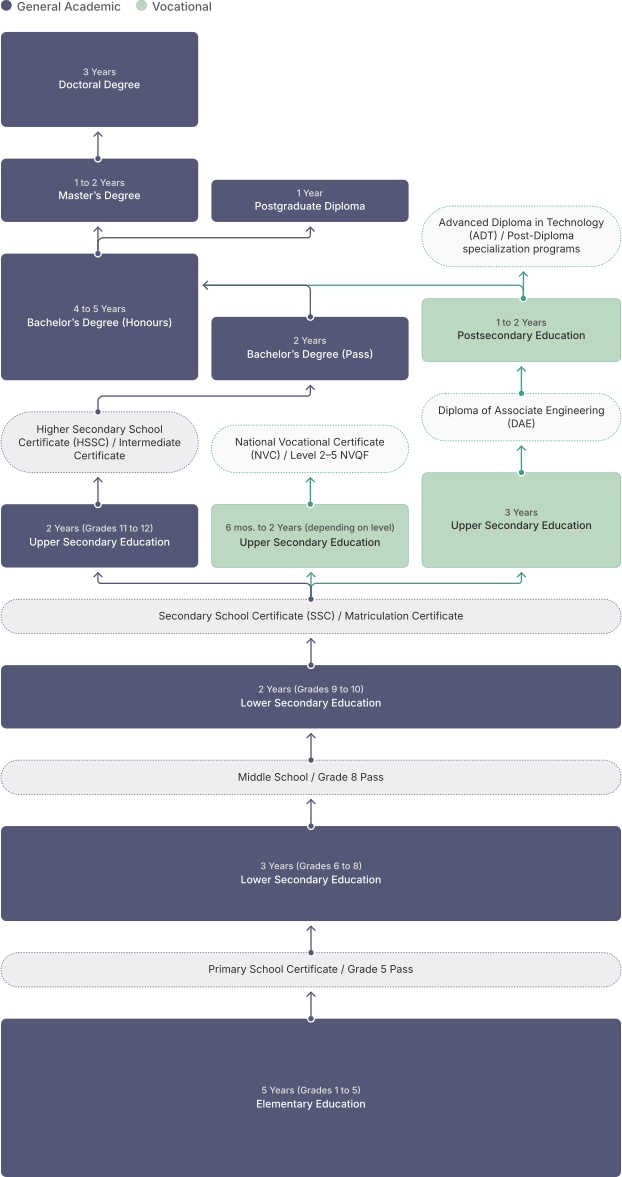
System Structure
Language and Literacy
Official Language(s)
Official national or regional languages.
English, Sindhi (Sindh), Urdu
EF English Proficiency Index
The EF English Proficiency Index (EF EPI) places the surveyed countries and territories into five proficiency bands, from Very High to Very Low. These bands indicate the level of the “average” person.
Pakistan
493 (low proficiency)
Global Rank
67 of 123
Source: EF English Proficiency Index
Youth Literacy Rate (Ages 15–24)
Literacy rates indicate how well a country’s education system has been functioning, particularly at the elementary level.
Pakistan
73.1% (2021)
OECD Average
99.3% (2022)
Source: UNESCO Institute for Statistics
Access and Investment
Mean Years of Schooling
Average number of completed years of education of a country’s population age 25 years and older, not including years spent repeating individual grades.
Source: UNESCO Institute for Statistics
Government Expenditure on Education
Expressed as a percentage of the country’s gross domestic product (GDP) for the same financial year. The Education 2030 Framework for Action, adopted by UNESCO member states in 2015, recommends countries allocate at least 4 percent to 6 percent of GDP to education.
Pakistan
1.95% (2023)
Global Rank
186 of 203
Source: UNESCO Institute for Statistics
Participation of Youth in Education and Training
Participation rate of youth (ages 15 to 24 years) in formal and non-formal education and training in the previous 12 months.
Pakistan
28.3% (2021)
Global Rank
164 of 171
High Income Countries Average
63.6% (2024)
Source: UNESCO Institute for Statistics